Minggu, 21 Februari 2016

Cadi Sambi Sari The Java Underground Temple

Cadi Sabi Sari Underground Temple google doc

When Karyowinangun on a morning in 1966  a rare occurrence for him in the fields at the time, when you're swinging the spade into the ground. Hoe who swung to the ground hitting a boulder after visits has carved on its surface. Karyowinangun and nearby residents felt surprised by the presence of the boulder.Sabi Sari Temple on Jl. Sambisari, Sambisari village, district. Kalasan, district. Sleman, Yogyakarta.

Office aware of any archaeological findings was imminent and the next set of rice acreage Karyowinangun as asylum immemorial. Carved stone found was allegedly part of the temple were probably buried under paddy fields. Excavation finally made up to find hundreds of other rock fragments along with ancient statues. And true enough, the stones were indeed a component of a temple.

Hose 21 years later, finally able to enjoy the beauty of the temple. The building of a temple named Sambisari it stands majestically in Sambisari, Village Purwomartani, Kalasan District, Sleman, 10 kilometers from the city center. You can reach by driving through road traffic Yogya-Solo to find a signpost to this temple. Next, we turn left to follow the road.


Cadi Sabi Sari Underground Temple google doc


Surprised when he arrived at the temple area. When direct view into the middle of the temple area, just a stone structure looks roofs as only plays a few meters above the ground. wonder, what really Sambisari only that small? Upon approaching, then we got the answer. Apparently, Sambisari were 6.5 meters lower than the surrounding area.

Sambisari expected to be built between the years 812-838 AD, during the reign of Rakai possibility Garung. The temple complex consists of 1 main temple and three temples companion. There are two fences surrounding the temple complex, the fence has been restored completely, while the others are only displayed little fence to the east of the temple. Still as a barrier, there are eight pole phallus scattered in every direction of the wind.

The main temple building is unique because it does not have a pedestal like other temples in Java. Foot of the temple also functions as a pedestal so that parallel to the ground. The foot of the temple is left plain, without reliefs or decorations. Various ornaments were generally in the form of new simbar found on parts of the body to the top of the temple exterior. The decoration was a glimpse of batik motifs.


Cadi Sabi Sari Underground Temple google doc

Up the stairs the entrance of the temple, you can find an ornament of a lion that is in the mouth of makara (Magical animals in Hindu mythology) gaping. Figure makara in Sambisari and is an evolution of the makara form in India which can be a blend of an elephant with a fish or a crocodile with a tail bent.

1 meter wide lobby will be found after passing through the last steps of the main temple entrance. Surrounding it, you will see three niches, each containing a statue. On the north side, there is a statue of the goddess Durga (the wife of Lord Shiva) with eight hands, each holding a weapon. While on the east side there is a statue of Ganesha (son of the goddess Durga). On the south side, there is a statue of Agastya with aksamala (rosary) held about his neck.

Entering the main chamber of the temple, can be seen phallus and yoni is large enough, approximately 1.5 meters. Its presence indicates that the temple was built as a place of worship of Lord Shiva. Phallus and yoni in chambers of the temple is also used to make holy water. Typically, the water poured on the phallus and allowed to flow past the small ditch on the yoni, and then collected in a container.

Out of the main temple and to the West, you can see all three ancillary temples (companion) are facing the opposite direction. There are allegations that perwara is intentionally built without a roof because when excavation is not found rocks roof. In the central part of the temple chapel has a square pedestal decorated with dragons and padmasana (lotus) spherical convex on it. Possible, padmasana and pedestal used as a statue or offerings.

Cadi Sabi Sari Underground Temple google doc


When you're enjoying the beauty of the temple, you can go to the information room. Some of the photos depicting the environment paddy Karyowinangun before excavated and the initial condition of the temple when it was discovered to be found. There are also photographs of the excavation and reconstruction of the temple that lasted for tens of years, including pictures of other objects found during the excavation, in the form of a bronze statue which is now kept in the Archaeological Heritage Preservation Hall.

Beauty Sambisari now we can enjoy is the result of hard work of the archaeologist for 21 years. The temple originally like a giant puzzle, piece by piece reassembled again for the sake of preservation of the cultural heritage of the great in the past.

"Candi Ijo " The Green Hill Java Temple

"Candi Ijo " The Green Hill Temple  google doc

Down the road to the southern part of Queen Boko Palace complex is an exciting journey, especially for lovers of cultural tourism. How not, the temple there were scattered like mushrooms in the rainy season. One of them that has not become the talk is Candi Ijo, a temple that is located highest among the other temples in Yogyakarta.

Ijo Temple was built around the 9th century, on a hill known as Green Hill Ijo which height is 410 m above sea level. Because of its height, it is not only the temple but also can enjoy natural view below such as terraces of agriculture land with a steep slope. Although not a fertile area, natural view around the temple is very beautiful to enjoy.


The temple complex consists of 17 building structures that are divided into 11 terraces. The first terrace the yard leading to the entrance of the terraces stretching from west to east. Building on a terrace to the 11th form of encircling wall, eight pole phallus, four buildings namely the main temple, and three ancillary temples. The laying of the building on each terrace are based on kesakralannya. The building on the highest terrace is the most sacred.


"Candi Ijo " The Green Hill Temple  google doc
Variety of art forms encountered since the entrance of the building belonging to this Hindu temple.
Just above the entrance there is a motive when makara with dual heads and some of its attributes. Such motif and attributes can also be found in Buddhist temples show that such temples are acculturation forms of Hindu and Buddhist culture. Some temples have a similar motif when makara among others Ngawen, Plaosan and Sari.

There is also a statue describing flying woman and man directing to certain side. The figure may have several meanings. First, as suwuk to mngusir evil spirits and second as a symbol of the union of Lord Shiva and Goddess Uma. The unity is interpreted as the beginning of the creation of the universe. Unlike the statue in Prambanan Temple, natural style of the statues in Ijo Temple do not lead to eroticism.

Towards perwara on the terrace of the building to the 11th, there is a place like a tub where a fire sacrifice (homa). Right at the top of the rear wall of the tub, there are air holes or vents shape of a parallelogram and a triangle. The pit their mirror Hindu society that worships Brahma. Three ancillary temples show respect for the Hindu Trimurti society, namely Brahma, Shiva, and Whisnu.

One of the works that keep mystery are two inscriptions located on the terrace of the temple on the 9th. One inscription reads coded F Guywan or Bluyutan means hermitage. Another inscription is made of stone as high as 14 cm and 9 cm thick containing magic spells are predicted to be curses. Spells were written 16 times and of which read "Om Sarwwawinasa, Sarwwawinasa." It could be two inscriptions may relate closely to certain occurrences in Java at the time. What events? Up to now has not been revealed.

"Candi Ijo " The Green Hill Temple  google doc

Visiting this temple, you will see the beautiful scenery that can not be found in other temples. When facing westward and looked down, you could see the planes taking off and landing at Adisucipto Airport. This scenery because the Seribu Mountains where the temple stands is the border east of the airport. Because the existence of the temple in the mountains, too, Adisucipto airport runway could not be extended to the east.

Every detail of the temple presents meaningful thing and invites the visitors to reflection so that the trip will not just be fun. The existence of many great works of art without the name of the author shows a view of the past Javanese community that emphasized more on moral message presented by the works of art, rather than the creators or the greatness of his art.

Barong Temple Majesty of Java Spiritual

Barong Temple Majesty of Spiritual
The position is located on the southeast side of the temple complex of Ratu Boko, somewhat below the hills but still within the same system, the hills Batur Agung, at an altitude of 199 m above sea level. On the southwest side. Had a moment lost, then appeared back in full form. In Hamlet Candisari, Sambirejo, Prambanan temple two "twin" it's gallant stand on the court three broad levels. He Barong, where worshiping Vishnu and Goddess Sri is none other than the goddess of fertility by the Hindu community who was then farmed. They are so desperate for the grace of fertility on a hill full of karst rock.

Barong Temple Majesty of Spiritual

Discoverz to history, the temple is expected to be built between the 9th century and 10 is actually named Candi Suragedug. However, when the garnish (creepy giant figure that usually decorate the gate or entrance of the temple) shaped barong on each side of the temple is so distinctive local communities with happier dubbed Barong. Barong sea anchor in this temple in Hindu mythology as a creature believed to guard the sanctity of the building. Instead creepy as when the other building, barong-barong is even impressed gives smile. In addition to barong, another unique ornaments that decorate this temple is Ghana, which sustains the giant dwarf recesses of the temple.

In contrast to other temples in the vicinity that have booths (rooms in the temple), Barong built without any cubicle in it, there are niches that were once only serves to put the statue. Unfortunately, there is no statue, or yoni phallus seen today. Vishnu and Dewi Sri in the form of a statue is no longer stay here. Overall, the building is simple, there was no reliefs or sculptural puppet tale gods here and there. However, when one by one up the steps leading to the temple, we will feel the remnants of the genius of the local communities of the past. Pelatarannya spacious and located on the hill as it gives little room for each person who comes to enjoy the breadth of the horizon. The activity of the farmers around the temple when cultivate fields and rice paddies as if to explain the reasons why this temple stands.

Barong Temple Majesty of Spiritual

It was built facing west, where the sun round off the day. It did not take long to surround the entire building. But enjoy the scenery around him, perhaps not quite briefly. Afternoon, the scenery even more beautiful temple. The sun is more friendly and not so oppressive. Sound of the wind playing with leaves around it so melodious soothing. Aihhh ... it will not go home until the sun completely disappeared.

Sabtu, 20 Februari 2016

plaosan beautiful Java temple

plaosan beautiful temple google doc
After a visit to Prambanan, for not far from beautiful Hindu temple in the world you will also find other temples are equally compelling. Drove to the north as far as 1 km, you will find Plaosan, a temple that was built by Rakai Pikatan to the queen, Pramudyawardani. Located in the Village District Bugisan Prambanan temple architecture is a blend of Hindu and Buddhist.Plaosan complex is divided into two groups, namely Plaosan Temple and Plaosan temple. Second temple has a rectangular patio surrounded by a wall, which shaped meditation substation in the west and the stupa on the other side. Because of that similarity, the appearance Candi Lor and Kidul nearly identical when viewed from a distance so far Plaosan also often called the twin temples.

Lor Temple building has a central courtyard surrounded by a wall with the entrance on the west. At the center of the page there is a marquee measuring 21.62 m x 19 m. In the eastern part of the pavilion there are three altars, the altar north, east and south. Overview Amitbha, Ratnasambhava, Vairochana, and Aksobya there at the altar of the east. Stupa Samantabadhara and Ksitigarbha figure in northern altar, while Manjusri picture found in western altar.


plaosan beautiful temple google doc
Plaosan temple also has a pavilion in the center surrounded by 8 small temples are divided into 2 levels and each level consists of 4 temples. There is also a picture Amitbha Tathagata, vajra Vajrapani with attributes Utpala and Prajnaparamita is considered the "mother of all Buddhas". Some other pictures can still be found but not at the original place. Manujri figure which, according to a Dutch scientist named Krom is significant also found.Part Bas reliefs of this temple has a unique picture both men and women. There is a man who portrayed sitting cross-legged with hands to worship as well as the figure of a man with his hands vara mudra and vases on foot surrounded by six smaller man. A woman there is depicted standing with hands vara mudra, while around him there are books, pallet and vases. Krom argued that the figures he was the picture of a woman patron supporter of the two temples.The entire complex has 116 stupas Plaosan ancillary and 50 ancillary temples. Stupa chapel can be seen on all sides of the main temple, as well as ancillary temples are smaller. When walking to the north, you can see open building called Mandapa. Two inscriptions can also be found, the inscription on the gold coins in the north of the main temple and an inscription written on a stone in the first row ancillary temples.

plaosan beautiful temple google doc
One peculiarity Plaosan is a terrace surface is smooth. Krom argued temple terrace is in contrast to other temples built terraces in the same period. According to him, it was associated with the function of the temple at the time suspected to store the canonical texts of Buddhist monks. Other allegations came from Dutch scientists, if the number of priests in the area a bit so maybe terrace was used as a temple (Buddhist temple).If you look around the temple, you will know that Plaosan actually a vast temple complex. It can be seen from the existence of a fence along the 460 m from north to south and 290 m from east to west, also interior fence consisting of a trench along the 440 m from north to south and 270 m from west to east. Trenches that make up the interior of the fence can be seen by walking eastwards through the middle of this historic building.

Jumat, 19 Februari 2016

Mendut Temple The reflect glory and sacred Java

Mendut Temple reflect the glory and sacred google doc
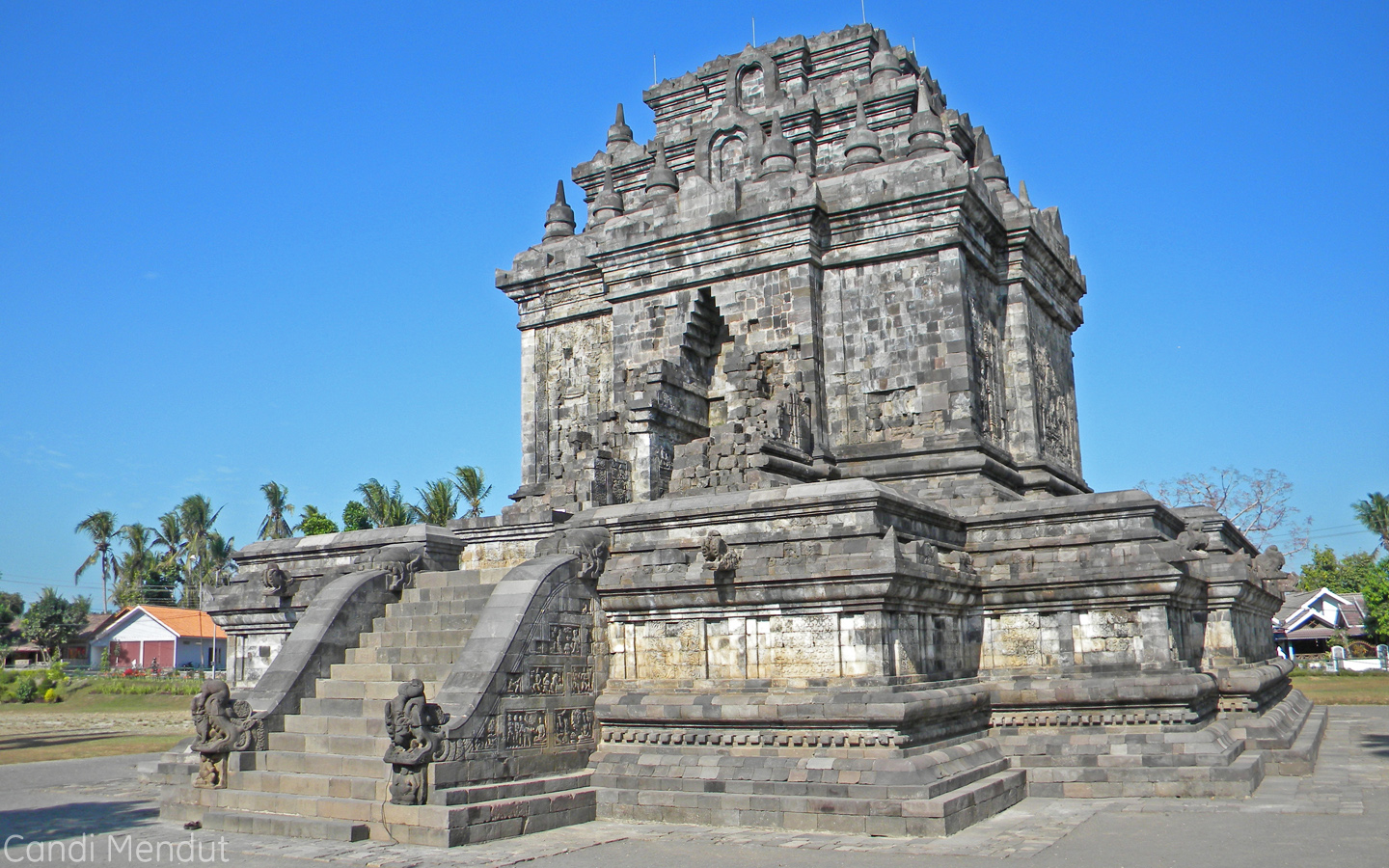
Mendut is a Buddhist-style temple. The temple is located at Jalan Mayor Sills Mungkid City, Magelang regency, Central Java, to be located approximately 3 kilometers from the temple of Borobudur.Many relics that reflect the glory and grandeur of the past scattered in various parts of the archipelago. One of the remaining past splendor Mendut is located about 3 km east of Borobudur. Kayumwungan inscriptions found in Karangtengah mention that Mendut built by King Indra of Sailendra dynasty. Rectangular-shaped temple with a terraced roof decorated with small stupas built earlier than Pawon and Borobudur is situated in a straight line. In contrast to the Borobudur temple facing toward the sunrise, then Mendut entrance facing west.

Mendut Temple reflect the glory and sacred google doc

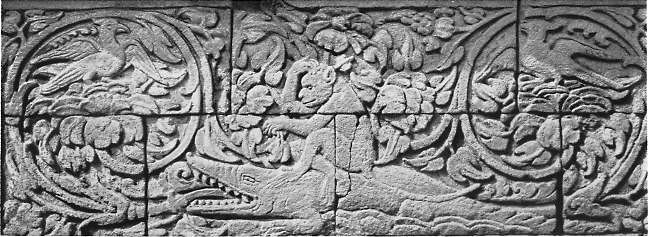
That morning when visiting the temple looks few foreign tourists were climbing the stairs of the temple. From a distance Mendut look elegant and sturdy stand on the foot-high temple of 3.70 m. Arriving at the court, walked around the foot of the temple and found some relief panel that tells about the birds and turtles, monkeys and Streaked Weaver, Brahmins and crabs, as well as a number of other fables. At first glance it looks like a story reliefs intended for children, but actually reliefs depicting the Jataka tale that gives a moral message for all those who visit Mendut. Up to the temple body, found 8 relief Bodhisattva with a variety of hand posture and much larger than the panel reliefs at Borobudur.


Mendut Temple reflect the glory and sacred google doc

When set foot in the temple, fragrant flower fragrance mingled with the scent of incense wafted by clearly. Three 3-meter high statue of golden light illuminated welcome. Sized statues which were in a booth Mendut it is a statue of Buddha Dyani Cakyamuni or Vairocana, Avalokitesvara statue, and the statue of Bodhisattva Vajrapani. Cakyamuni Dyani Buddha statue in the middle sitting with both legs angled downward and attitude of the hand turning the wheel of dharma. Carved out of the rock intact with high accuracy makes the three statues that look elegant and dashing. In front of the statue of Buddha are fresh flower arrangements, hiolo, and incense.

Mendut Temple reflect the glory and sacred google doc

Enjoying the beauty of Mendut and three statues of giant, leaving the temple gate past a row of souvenir stalls. Not far from the temple are Buddhist Monastery silent and open to the public. The lotus flower blooming in the pool as well as a number of stupas which decorate lined driveway Buddhist Monastery.


Mendut Temple reflect the glory and sacred google doc
 Every night starting at 7:00 p.m. to 20:00 pm, in this place to do ritual chanting or meditation by listening to music and singing. There must be a Buddhist, anyone can follow the ritual chanting. But unfortunately, while visiting Buddhist Monastery in the evening chanting ritual had just ended. we move left and Mendut Buddhist Monastery which stands majestically in the midst of darkness.

The Great java Queen "Boko Temple"


The Great Queen Boko Temple google doc
Site queen Boko or Boko temple (Javanese: Ratu Baka) is an archaeological site which is a complex number of the rest of the building which is located approximately 3 km south of the Prambanan complex, 18 km east of Yogyakarta or 50 km southwest of the City Surakarta, Central Java, Indonesia. Ratu Boko is situated on a hill at an altitude of 196 meters above sea level. Wide whole complex is about 25 ha

Boko queen's palace is a magnificent building that was built during the reign of Panangkaran, one of the descendants of the Sailendra dynasty. The palace was originally named Abhayagiri Vihara (meaning monastery in a peaceful hill) was built for seclusion and focus on spiritual life. Being in this palace, you can feel peace and see the sights of the city of Yogyakarta and Prambanan the background of Mount Merapi.
The Palace is located 196 meters above sea level. 250,000 m2 area of ​​the palace is divided into four, namely central, west, southeast, and east. The middle section consists of the main gateway, square, Combustion Temple, pond, berumpak and assembly hall. Meanwhile, the southeast part includes Hall, Hall-Hall, 3 temples, ponds, and complex for princess. The cave complex, Buddhist Stupa, and there is a pond in the east. While the western part consists only of the hills.


The Great Queen Boko Temple google doc
If you enter from the gate of the palace, you will go directly to the middle. Two high gates will welcome you. The first gate has three entrances while the second had a 5-door. If you are careful, on the first gate will find the word 'Panabwara'. Said that, based on inscriptions Middle Wanua III, written by Rakai Panabwara, (descendant Panangkaran) who took over the palace. The purpose of writing his name is to legitimize power, give 'power' to a more glorious and signaled that the building is the main building.About 45 meters away from the second gate, you will see a temple made of white stones so-called Temple Batu Putih. Not far from there, will find Combustion Temple. The temple is a square (26 meters x 26 meters) and has 2 terraces. As the name implies, the temple was used for cremation. Besides two temples, sacred terrace and a pool would be met then you have to walk approximately 10 meters from Combustion Temple.A mysterious well be seen if you walk to the southeast of the Combustion Temple. That said, the well was named Amrita Mantana which means sacred water given spell. Now, the water is still often used. Local people say, well water that can bring good luck to the wearer. While Hindus use Tawur Agung ceremony a day before Nyepi. Using water in the ceremony is believed to support the objective, namely to purify themselves to return the earth and its contents to its initial harmony. YogYES suggests that you visit Prambanan temple one day before Nyepi day to see the ceremony process.

The Great Queen Boko Temple google doc
Stepping into the eastern part of the palace, you will see two caves, a large pool measuring 20 meters x 50 meters and a Buddhist stupa sits quietly. Two caves were formed from sedimentary rock called breccia Pumis. The cave, which is more on so-called Gua Lanang while under the so-called Cave Wadon. Gua Lanang exactly in advance, there is a pool and three stupas. According to a research, it is known that it is Aksobya stupa, a Buddhist Pantheon.Although founded by a Buddhist, has Hindu elements. It can be seen with the Linga and Yoni, Ganesha, and the gold plate that reads "Om Rudra ya namah swaha" as a form of worship to the god Rudra is another name of Lord Shiva. The existence of Hindu elements that prove the existence of religious tolerance that is reflected in architectural works. Indeed, when it Panangkaran which is Buddhists live side by side with the followers of Hinduism.Few know that this house is a witness of the initial triumph in the land of Sumatra. Balaputradewa had fled to the palace prior to Sumatra when it was attacked by Rakai Pikatan. Balaputradewa rebelled because they felt as the number two in the Ancient Mataram Kingdom government as a result of the marriage of Rakai Pikatan with Pramudhawardani (Balaputradewa brother. After he was defeated and fled to Sumatra, before he became king in the kingdom of Srivijaya.

The Great Queen Boko Temple google doc
As a heritage building, Ratu Boko Palace is unique among other relics. Other buildings are in the form of a temple or shrine, as the name implies this shows characteristics as a residence. It was shown from the building in the form of pillars and roof are made of wood, even though we can only see remains of stone only. Palace in, then you will get more, one of them a view of the sun is setting. An American tourist said, "This is the most beautiful sunset on earth."

Majapahit The Java Great Kingdom

Majapahit The Java Great Kingdom google doc

When to Mojokerto district, a small town located about 45 kilometers southwest of the city of Surabaya, the capital of East Java province.Majapahit was an ancient kingdom in Indonesia that once stood from about 1293 to 1500 AD This kingdom reached the height of glory during the reign of Hayam Wuruk who ruled from 1350 to 1389. Majapahit dominate other kingdoms in the Malay Peninsula and Borneo Philippines Sumatra Bali , Kingdom of Majapahit Hindu-Buddhist kingdoms adl last reply to master the Malay Peninsula and is considered as one of the greatest country in the history of Indonesia. Power lies Borneo Malayan Peninsula Sumatra to eastern Indonesia even though the territory is disputed.

Majapahit The Java Great Kingdom google doc

The beginning of Majapahit
The origin of the kingdom of Majapahit told that after Singasari expel Sriwijaya of Java as a whole in 1290, Singhasari became the most powerful empire in the region. This is a concern of Kublai Khan, the ruler of the Yuan Dynasty in China. He sent a messenger named Meng Chi to Singasari demanding tribute. Kertanagara, Singasari last monarch, refused to pay tribute and destroyed the face of the envoy and cut off his ear. Kublai Khan was furious and dispatched a large expedition to Java in 1293 AD At that time, Jayakatwang, Duke Kediri, killing Kertanagara. On the advice and Aria Wiraraja, Jayakatwang give forgiveness to Raden Wijaya, Kertanegara-law, who came to surrender. Raden Wijaya then given Pull Forest. He opened the forest and built a new village named Majapahit. The name was taken and "fruit maja" and "bitterness" and the fruit. When the troops arrived Mongolia, Raden Wijaya allied with Mongolian troops to fight Jayakatwang. Raden Wijaya turned against Mongol allies, forcing them to return menanik troops because they are in unfamiliar territory. Date of birth of the Majapahit kingdom on 10 November 1293 is the day of the coronation as king Raden Wijaya. He was crowned with the official name Kertarajasa Jayawardhana.of Majapahit

Majapahit The Java Great Kingdom google doc


Early kingdom of Majapahit
kingdom is facing many problems. Some reliable Kertarajasa, including Ranggalawe, Sora, and Nambi rebelled against him, even though the rebellion was not successful. But apparently Mahapatih Halayudha the one who did the conspiracy (conspiracy) to drop all the reliable king. He did it in order to achieve the highest position in pemenintahan. However, after the death of the last rebel (Kuti), Halayudha dltangkap and imprisoned, and sentenced to death. Raden Wijaya died in 1309 AD Son and successor of Raden Wijaya, Jayanegara is the master of evil and immoral. It has a small Kala Gemet name, which means "weak villain," Year 1328 M. Jayanegara killed by his doctors, Tanca. Stepmother namely Gayatri Rajapatni should replace him, but Rajapatni chose to resign and the palace and become priestesses. Rajapatni Tribhuwana Wijayatunggadewi appoints daughter to be queen of Majapahit. During power Tnibhuwana, Iebih Majapahit Empire evolved into a large and well-known. Tribhuwana master Majapahit until her death in 1350 AD Its leadership was continued by his son, Hayam Wuruk.

The Golden Age kingdom of Majapahit
Hayam Wuruk, also referred to as Rajasanagara. He ruled Majapahit and the years 1350-1389 AD Majapahit achieving the peak of its glory with the help Mahapatih, Gadjah Mada. Under the order of Gadjah Mada (1313-1364 AD), Majapahit master  many areas. In 1377 AD, a few years after the death of Gadjah Mada, Majapahit attack Palembang to the sea, causing the collapse of the remnants of the kingdom of Srivijaya. Besides Gadjah Mada, Majapahit also has a famous general who is also named Adityawarman. He is famous for conquest in Minangkabau. According to the thirteenth canto Kakawin Nagarakertagama-XV, Majapahit territory, including Sumatra, the Malay Peninsula, Borneo, Sulawesi, Nusa Tenggara Islands, Maluku, Papua, and most of the Philippine Islands. However, the limits of nature and the economy showed that the areas of power are not under the centralized rule of Majapahit, but connected to one another by trading in the form of monopoly by the king. Majapahit also has a relationship with Campa, Cambodia, Siam, southern Burma, and Vietnam, and even send diplomat ambassador to China.

"Mahapatih Gadjah MadaMajapahit The Java Great Kingdom google doc


The collapse of the Majapahit Kingdom
Majapahit power gradually weakened when the civil war (War Paregreg) in the year 1405 to 1406 AD, among Wirabhumi against Wikramawardhana. There is also the turn of the king being debated in the 1450s and a major revolt by a nobleman in 1468 AD Majapahit Empire ended in 1400 Saka or 1478 AD This is evident in candrasengkala (a marker of the year), which reads "vanished ilang kertaning earth" that means "vanished lose the prosperity of the earth". In that year described the death of Bhre Kertabumi, king of the 11th Majapahit, by Girindrawardhana. Majapahit kingdom setback occurred in the late 14th century and early 15th century. Majapahit influence throughout the country began to decrease. At the same time, an Islamic empire to stand the Sultanate of Malacca, began to appear in the western part of the archipelago. The historical record of Chinese, Portuguese, and Italian explained that there has been a transfer of power from the hands of the Hindu Majapahit into the hands of the Duke of Unus, authorities and the Sultanate of Demak, between 1518 and 1521 M.Sekian description of the history of the kingdom of Majapahit until Collapses, may be useful.